 Soul Map
 Hebrew
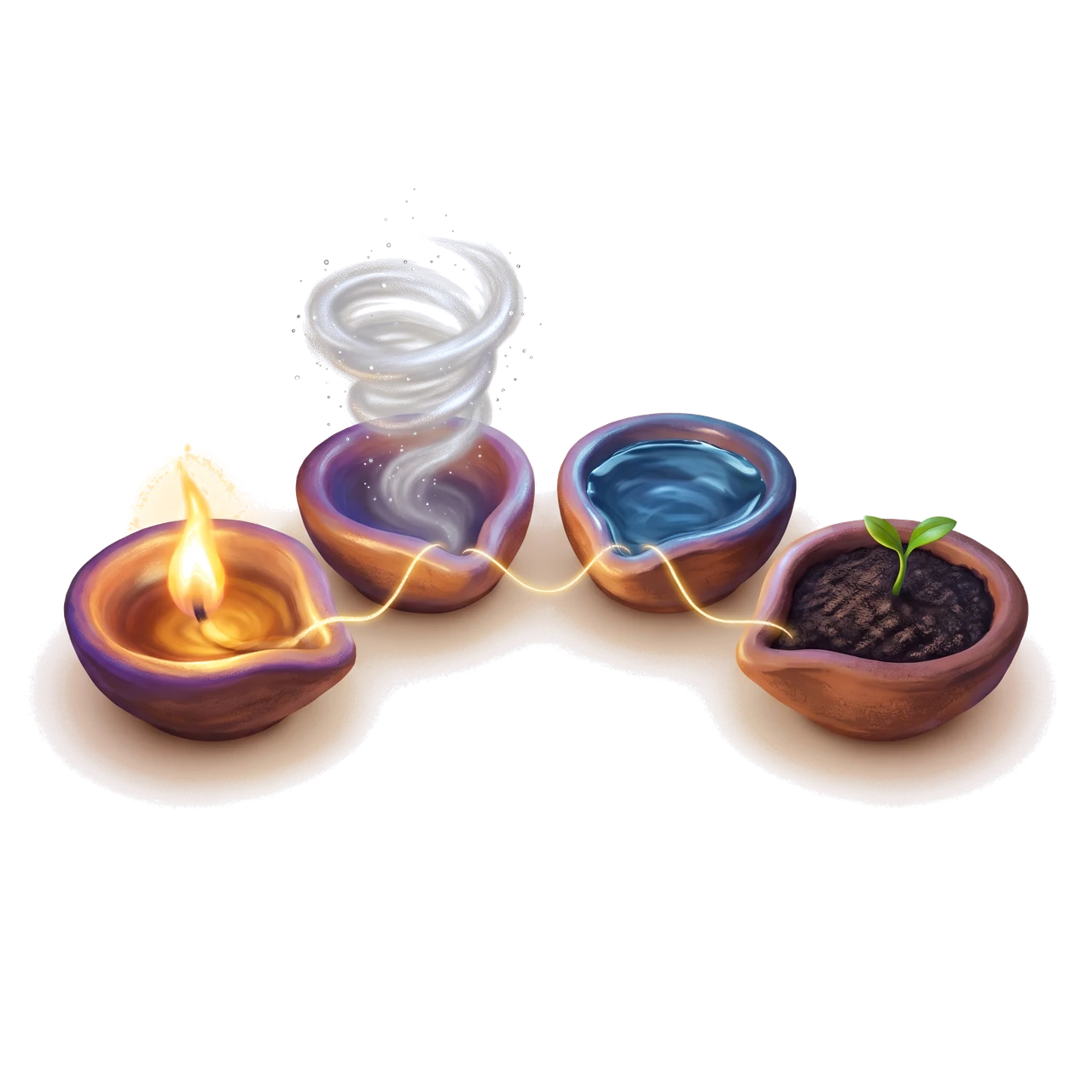
The four elements of the soul in Kabbalah
You have opened your notebook for an idea you care about. Some days you want to talk about it; on others you need quiet before you can continue. It can be hard to understand how enthusiasm, sensitivity and a need for steadiness all belong to you.
Each wish belongs to your experience, yet you are missing a picture that connects them and explains what the language of the four elements actually says about them. You want to understand how initiative, connection and quiet can coexist, and how the Kabbalistic source differs from a personal use of that language. We begin with the four elements in Kabbalah and their traditional source before considering contemporary personal interpretation.
The source: elements and the cultivation of character
In Sha’arei Kedusha, Part One, Gate Two, Rabbi Chaim Vital connects fire with pride and anger, air with idle speech, water with the pursuit of pleasure, and earth with sadness. He also describes corresponding good qualities. The discussion belongs to spiritual and moral work within Torah and mitzvot.
The language of initiative, communication, feeling and persistence used below is a contemporary reflection, rather than a quotation or complete account of his teaching. Keeping that distinction clear respects the source and makes the article easier to use. Recognising a quality in an example does not establish your personal elemental composition.
Fire: enthusiasm that leaves room to listen
Imagine describing your idea to someone. The words come quickly; you can almost see the finished result. There is something valuable here: a willingness to offer what does not yet exist and give it your attention. In the contemporary imagery of this article, fire names that vitality.
Then the other person asks a question you had not considered. It may feel discouraging, or it may help the idea mature. The useful distinction concerns what your enthusiasm makes possible. Can another person contribute? Can one detail change? The energy of beginning can remain alive while becoming more receptive.
Air: bringing an idea into words
Inside your head, the connections seem obvious. To the person hearing them for the first time, they may be less clear. You find an example, replace a complicated expression and notice the moment understanding arrives. Air provides an image for this movement between thought, language and contact.
Explaining well involves more than saying everything. A short sentence followed by a real question may open more understanding than a long account. Notice when words clarify, when they express delight and when they occupy a silence in which you actually wanted to hear a response. Listening belongs to this exchange too.
Water: the feeling within the activity
As your idea begins to involve people, another question appears: how do they experience it? One person is excited, another uncertain. You may also want someone to understand why the project matters so much to you. The image of water makes room for feeling and for what happens beyond the written plan.
Care can give an activity depth. It also invites clarity about what you want to offer and what you hope to receive: attention, recognition or participation. Naming such a wish can help generosity remain a willing contribution. You can care about the other person and give your own experience a place in the conversation.
Earth: continuing after the exciting beginning
A week later, you reopen the notebook. Now there is an email to answer, a time to arrange and a small task to finish. These parts may look less impressive, yet they carry a capacity of their own: staying in relationship with something after it stops being new. Earth gives that quiet continuity an image.
Persistence can take different forms. An overloaded plan may need adjusting while the underlying interest remains. A manageable task, a realistic place in the week and recognition of what is already complete can make progress visible. The sustained part of the work deserves attention alongside the first spark.
Several qualities can belong to one story
The same idea can need vitality, clear expression, care and continuity. You can enjoy beginning and appreciate structure. You can listen closely and want to lead. Exploring their relationship often gives more understanding than choosing a single identity.
Bring curiosity about your own circumstances rather than a conclusion drawn from an illustrative scene. For a closer look at that connection, read the four elements in a personal analysis.
Where the elements fit within a Soul Map
A Personal Kabbalistic Soul Map can explore how several qualities work together in your life:
- What brings your initiatives to life and how you like to give an idea form.
- The place of feeling and connection in the way you express yourself.
- How a need for steadiness and continuity sits alongside the wish to begin.
The digital Kabbalistic Soul Map combines knowledge drawn from Kabbalistic books and Jewish sources with numerology and contemporary personal interpretation, using names and birth details. The elements form part of a wider perspective on your strengths, tendencies and the question you bring. This is spiritual reflection rather than a scientific personality assessment.
Delivery is within 48 hours through a personal digital viewer with a table of contents, audio summaries read in AI voices and a downloadable PDF. The link and summaries remain available for 30 days from delivery. You can keep the downloaded PDF for personal use and return to a passage in light of an actual situation.
If you would like a personal perspective on the qualities you bring to a beginning and the needs that accompany it, order your Personal Kabbalistic Soul Map. Follow the link to choose one topic, up to three topics for the same person, or a full map for a broader view of your strengths and path.
Order your Personal Kabbalistic Soul Map to explore your strengths and tendencies